Ancient beech tree in the winery requires felling
In the heart of the picturesque Wine Village, a cultural monument built in 1925 to celebrate the "1000-year anniversary of the Rhineland's affiliation with Germany," a 100-year-old red beech tree stands tall, towering above the timber-framed houses. However, this iconic tree, visible to visitors since its planting, is facing an uncertain future due to a wood-decaying fungus.
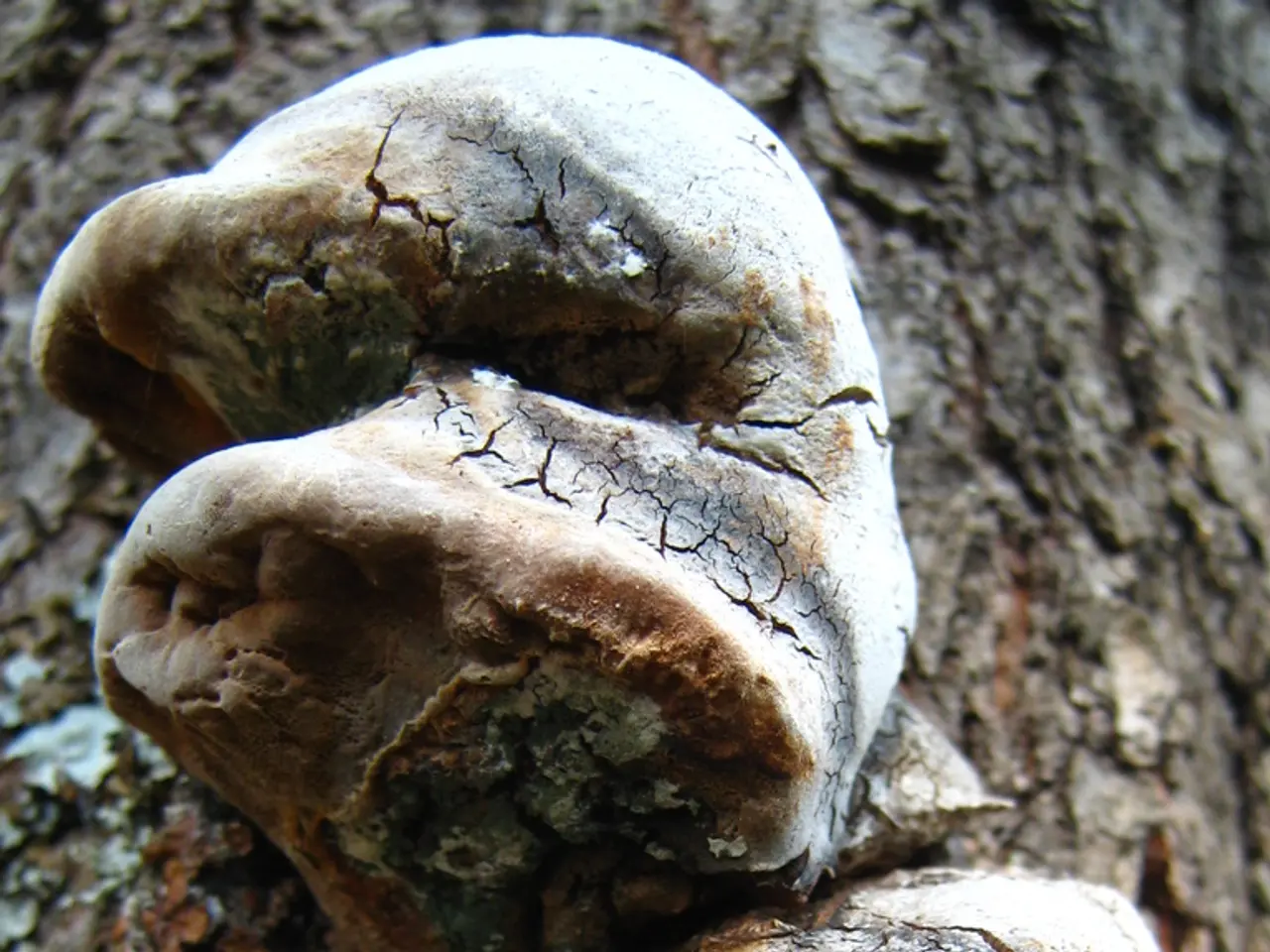
The fungus, known as the Lack Porling (Ganoderma applanatum), is a weak parasite that primarily affects broad-leaved trees like beech and oak. It causes white rot, weakening the tree's structural integrity and leading to its eventual decline. The Lack Porling is visible on the red beech tree in the Wine Village, at the base of the trunk, and the annual fruiting bodies of the fungus can be found on the tree from summer to late autumn.
The red beech tree's decline has been a concern for city gardeners and tree experts, who have determined that the tree must be felled in the coming weeks. City Tree Manager Stephan Dally has announced that they will coordinate with the Central Building Management to determine the best time to plant a new, regionally appropriate tree in the inner courtyard, ensuring the continuation of the tree's presence in the village.
The removal of such an old tree represents a substantial cultural and emotional loss. The tree's age and status as a cultural monument make it an irreplaceable part of the village's heritage. Its loss may affect community sentiment as well as biodiversity associated with the tree.
Wood-decaying fungus weakens the tree structurally, which can be dangerous, but removing a century-old tree disrupts local biodiversity, since old trees support many species, including fungi, insects, birds, and small mammals. The disturbance may also affect soil and microhabitats.
However, there are alternative plans to mitigate the impact of the tree's removal. Early detection and intervention are critical with wood-decaying fungi to possibly save the tree or delay removal. Techniques include targeted fungicide treatment, pruning affected limbs, improving tree vitality through fertilization, and soil management.
Given the cultural significance, replanting efforts with young red beech trees or other native species can be planned to eventually restore the site’s ecological and aesthetic value. Since large trees take decades to mature, a long-term restoration plan is essential.
In some cases, sections of the tree (e.g., wood for artifacts or displays) can be preserved to maintain cultural memory after removal. Involving local stakeholders in decision-making and restoration efforts can help preserve cultural connections and support ecological recovery.
While no exact details on alternative plans were available, mitigation measures and replacement planting constitute standard best practices for managing the removal of culturally significant old trees affected by fungal decay. Early action is stressed in managing bioinvasions and decay to minimize costs and damage.
The emphasis on organic and sustainable practices in nearby vineyards suggests a community value placed on environmental care, which could influence restoration approaches. The Wine Village, with its rich history and natural beauty, will continue to be a cherished attraction, and efforts to preserve its cultural and natural heritage are essential.
The tree will not be felled until October, as the Wine Village will be closed for renovation anyway, for safety reasons. The removal of the red beech tree is a significant event, impacting both the cultural heritage and local ecosystem of the Wine Village. Alternative plans should focus on early fungal management, safe removal when necessary, and thoughtful replacement planting combined with community involvement to sustain the cultural and natural heritage of Wine Village.
[1] Best Practices for Managing the Removal of Culturally Significant Old Trees Affected by Fungal Decay. (n.d.). Retrieved from https://www.researchgate.net/publication/323867169_Best_Practices_for_Managing_the_Removal_of_Culturally_Significant_Old_Trees_Affected_by_Fungal_Decay
[2] Sustainable Viticulture Practices in the Wine Village. (n.d.). Retrieved from https://www.sustainablewinevillage.org/viticulture-practices
- The science of environmental-science and sustainable-lifestyle practices can provide solutions for managing the removal of the cultural-monument red beech tree in the Wine Village.
- The home-and-garden department in the city could collaborate with tree experts to follow best practices, as outlined in the Best Practices for Managing the Removal of Culturally Significant Old Trees Affected by Fungal Decay.
- The environmental-science knowledge from nearby sustainable-viticulture practices in the Wine Village can inform restoration efforts, ensuring the continuation of the tree's presence in the village, and maintaining its ecological and aesthetic value.